

Decay and Resurrection - the two sides of the phenomenon of heat
From a lecture given by the author at the Free University of Lundo, Trentino, Italy, in July 2025 on the question of the relationship between physical heat and thermal ether.
 |
Here we would like to attempt a rather unusual and perhaps challenging look at the phenomenon of heat (a contribution by the author).
Heat, a seemingly everyday phenomenon in the external world, and yet it has already caused physicists some headaches when they considered it as a form of energy in relation to other forms of energy1. It is associated with the color impression of a reddish glow, a white-yellow glow, burning and flame. Rarely do people think of heat as the bluish light of a gas flame.
1) See article "A Short Essay on the Relationship between Science and Spirituality", term entropy on this website.
 |
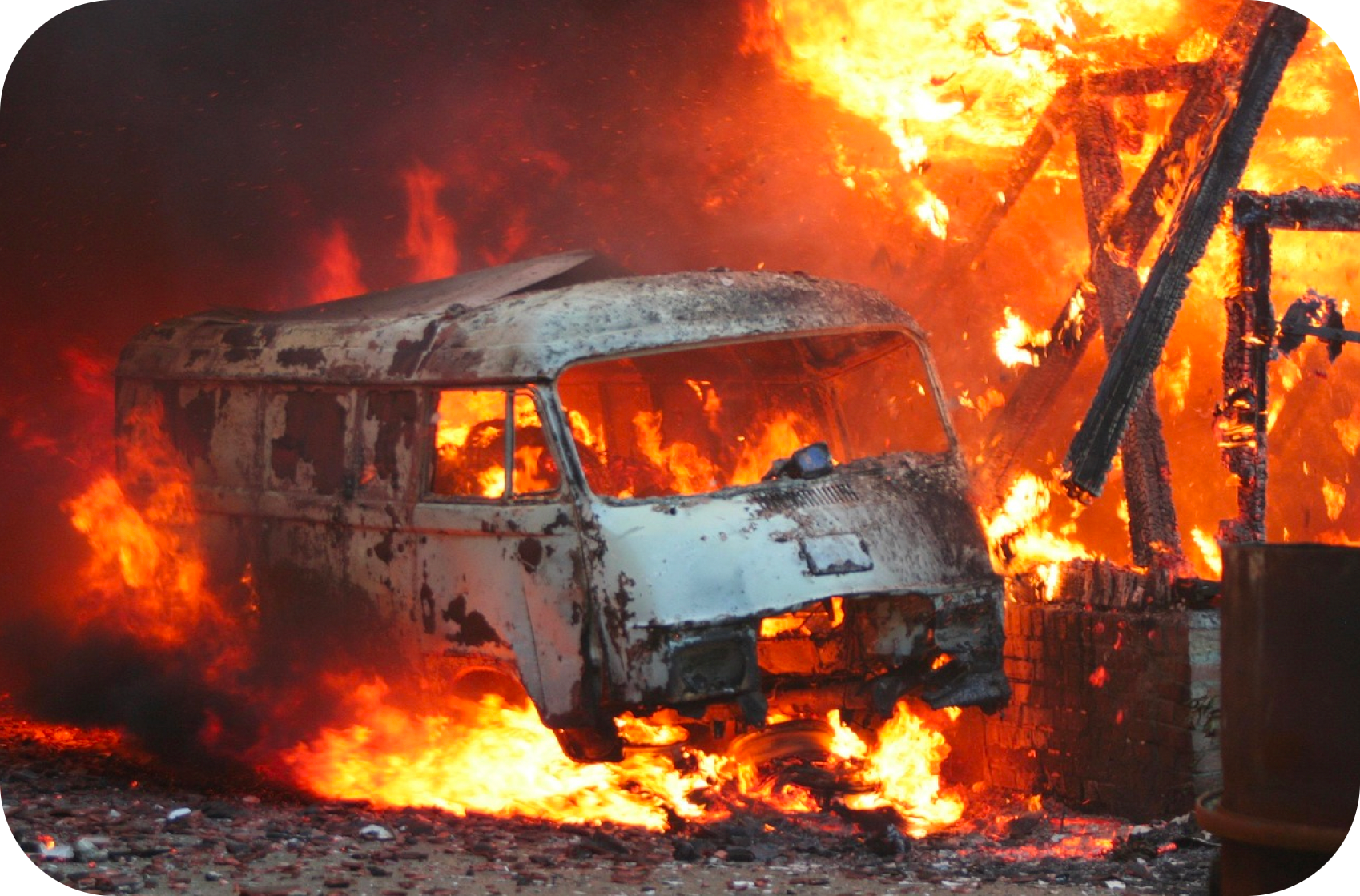 |
| Whether as a comfortable fireplace (left) or as an all-destroying fire (right), we usually associate the concept of external or physical heat with the appearance as a reddish-yellow, sometimes disturbingly flickering flame or the process of burning. The fire burns from the matter upwards and outwards and the flame and the combustion products are lost in the vastness of the outer space. (Images: Pixabay) |
Note: In natural science, strictly speaking, a distinction is made between the "heat" that an object or body has and refers to this as thermal energy or "internal energy". Heat in the narrower sense (contact heat, convection heat, radiant heat) is understood in physics as the transfer of thermal energy from one body to another, i.e. as the change in thermal energy over time. A distinction is therefore made between thermal energy and heat. In essence, however, both are the same, one only distinguishes here between a static state and a process, i.e. a temporal change of one and the same thing.
I will not go into this exact conceptual distinction in detail, but will speak generally of heat or heat energy, although in the following we will be interested in heat as a phenomenon in real temporal processes.
The largely unknown concept of the "heat-ether" or "fire-ether", which seems to have only the name in common with the warmth of the outer world, behaves quite differently. For it is described in spiritual science as follows2:
"The so-called fire-forces or fire-spirits (as etheric forces of general nature) show themselves in supersensible perception in strong bluish tints with calming effects. Through their presence, they cast a plasticizing light on the entire phenomena of the earth and on nature. In this plasticity the details appear as individualities appearing for themselves, and yet this fire-ether has a connecting effect. The individual blade of grass forms a unity with the meadow through the fire-ether and is experienced in this belonging. But this fire-ether or the spirits of fire, if you name them in this way, are not to be confused with heat: they create a plastic sphere of unity and at the same time they give a feeling of centeredness to calm and peace in the heart."
2) Heinz Grill: Book "Übungen für die Seele", 2022, ISBN: 9783906873336, pages 71 and 72 ("Exercises for the Soul")
 |
The Heat- or Fire-Ether, sketch from the book "Geist und Materie"3 ("Spirit and Matter") according to the description by Heinz Grill: "The etheric fire-being has the property of penetrating all substances of the earth area from the outside to the inside. It therefore forms a wholeness and creates circular shapes." |
3) Günther Pauli, Book "Geist und Materie", 2013, ISBN: 978-3-8495-6780-4 ("Spirit and Matter").
Notes:
According to spiritual science, the living, the processes of life do not arise from "matter" or coarse-sensory matter, but from the etheric forces that are imperceptible to the senses and which seize and organize the world of matter. As already mentioned in the article "A Short Essay on the Relationship between Science and Spirituality", from the point of view of spiritual science, matter is not in a position to organize itself to higher life, it needs the etheric or formative forces, as these are also called.
The heat-ether is described as "connecting". One can ask oneself the question, why do people experience details not only for themselves, but also in a context, and can then even form corresponding generic terms?
Simple examples:
Tree → collection of trees → forest
Ears of corn → accumulation of ears of corn → cornfield
House → collection of houses → village/town
 |
The forest is more than just the sum of a number of trees. This can already be seen from a biological point of view, because it represents a habitat for a large number of other living beings and thus represents something new in relation to the term "tree". |
Each of these generic terms is not simply a sum of the individual units, but represents something new in itself as an overarching concept. You might say that it has something to do with thinking. But does thinking again have something to do with the aforementioned heat-ether?
In any case, in the above description of the heat-ether the reader can at first perceive a great difference, even a contradiction to the external heat: the outer heat appears reddish-yellowish or at least is associated with it, it is sometimes even restless and always fleeting. The so-called heat-ether is described as a strong bluish, coming from a radius, connecting, centering and calming. So what do the two phenomena have to do with each other? Why is the heat-ether called "heat-ether" at all?
Now let us first turn to the nature of external or physical heat.
We look at various processes and phenomena that are related to external heat and then check whether something common can be found in these processes.
First, let's do a little experiment: rub your finger vigorously on a woolen blanket, carpet, etc. What do you perceive? That's right, there is heat that you can feel and you also observe that this extra heat disappears again, so it doesn't stay on your finger when you stop rubbing. This simple experiment is not trivial, because it shows some essential properties of external heat:
1) Man has a sense organ for physical heat, he can perceive it directly through his skin. This is not a matter of course, because he or she has no immediate perceptual senses for electricity or radioactive radiation, for example, he or she can only perceive them through secondary effects. Or can you determine whether your car's 12V battery is charged and how much capacity it has simply by looking at it or touching it with your hands?
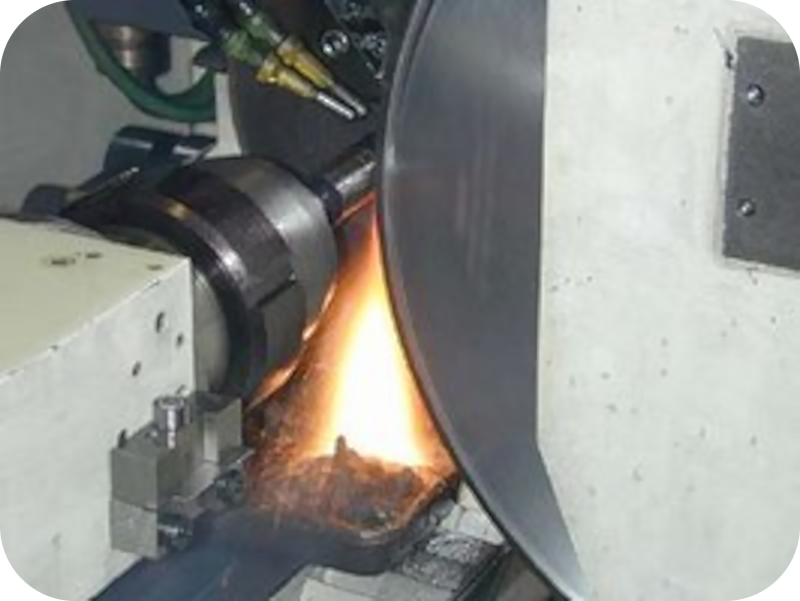 |
Release of heat during an industrial grinding process. For technicians, this heat is an annoying or even harmful by-product. It can damage the workpiece, a phenomenon known as grinding burn. (Image: Chemnitz Industrial Museum) |
2) Heat accompanies external processes such as friction. We can generalize this to a very large extent. No matter what processes we take from external technology and nature, work and household appliances, vehicles in operation, mechanical processes, chemical reactions, power plants in operation, the growth and decay of organisms: all processes in nature and technology are accompanied or even caused by physical heat and heat movements.
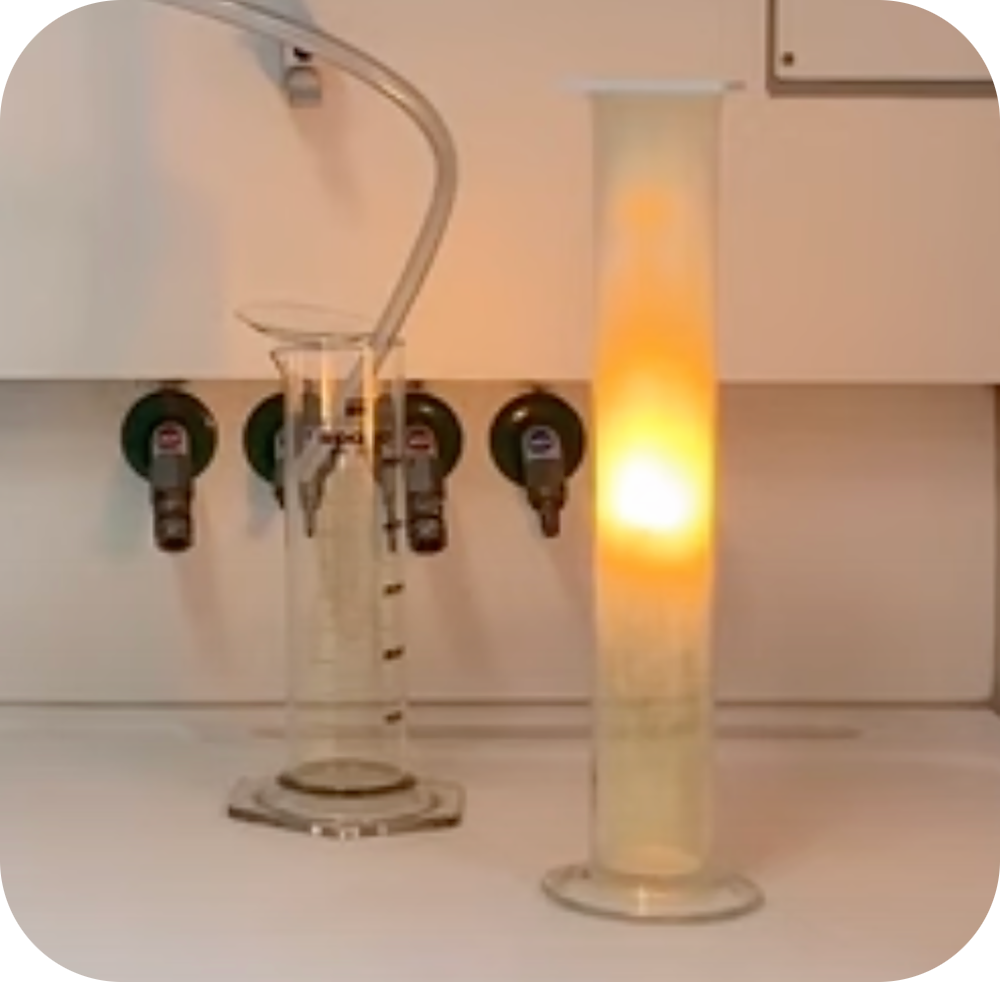 |
A chemical reaction with intense heat generation (right-hand cylinder). A piece of metallic sodium placed in a cylinder filled with chlorine gas ignites, and the chlorine gas and metal combine to form a salt: table salt. (Image: Author) |
We can therefore conclude that there are no real processes in the external world without heat phenomena or heat movements. Whether heat is a prerequisite for a process to take place at all, or whether it is even the cause of it, or whether heat only appears to be a side effect. Heat always accompanies external processes.
3) Let's do an imagination exercise. Imagine a red-hot iron ball weighing about 6 kg and heated to 600°C to 700°C. It is brought into a normal room with large tongs and placed on an asbestos plate. What will happen? Of course, the ball will slowly cool down and heat up the room.
 |
A glowing iron ball on a fireproof surface. It releases its thermal energy into the cooler environment, which in turn heats up. Now let's imagine: more thermal energy flows in from the environment surrounding the ball, making it even hotter and brighter, while the environment continues to cool down! (Image: AI) |
It is interesting to note that you can also imagine the opposite scenario, namely that the room continues to cool down on its own and the ball becomes even hotter. According to what is known in science as the conservation of energy, this would indeed be possible, but in reality it never happens on its own without further intervention!
This phenomenon points to another essential property of heat: physical heat is “dissipative,” it “disperses,” meaning that it spreads spontaneously from the hotter body to the cooler environment, never the other way around, even though the reverse would be conceivable.
4) Physical heat is a form of energy, but a special form of energy: other forms of energy (electrical energy, kinetic energy, potential energy, nuclear energy, etc.) can be completely converted into heat and are also converted into it, but heat itself cannot be completely converted into another form of energy. If you now say that electrical energy cannot be completely converted into mechanical energy or vice versa, this is precisely due to the occurrence of what is our topic, the occurrence of physical heat in every conversion process! Because of this law of nature, the efficiency, the degree of conversion from one form of energy to another, is also expressed as a percentage for all engines and power plants.
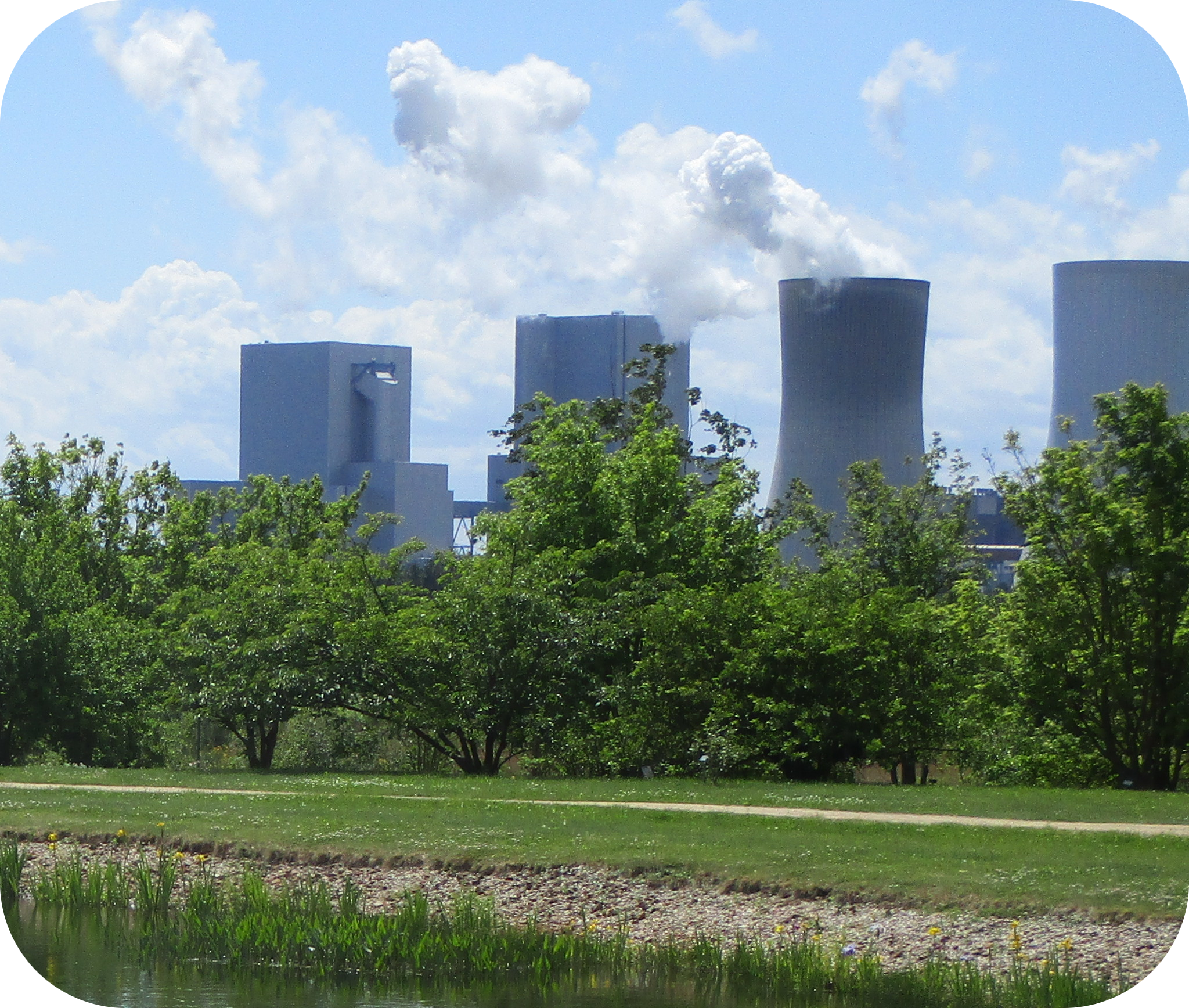 |
The Boxberg lignite-fired power plant in Boxberg, Saxony, Eastern Germany, has been Germany's largest power plant since March 31, 2024, with a rated output of 2,575 megawatts. The heat primarily generated by burning coal cannot be completely converted into electrical energy; as with any large power plant, the remaining heat escapes through the cooling towers. (Image: Author). |
Now let's do another visualization exercise to bring the thermal phenomena mentioned so far into a possible overall picture.
Imagine a small bouncing ball or rubber ball that you drop from a certain height onto the smooth floor of your room. Or imagine something completely different, for example, drilling a hole in the wall with your drill. Imagine the processes exactly as they happen in reality.
At the beginning, the ball is in your hand at a certain height above the ground. You let go of it, and after several bounces, it finally comes to rest on the ground. Or, at the beginning, you have the intact wall and the drill. You start drilling, the drill bit penetrates the wall, the drill and drill bit heat up, and in the end, you have the desired hole in the wall.
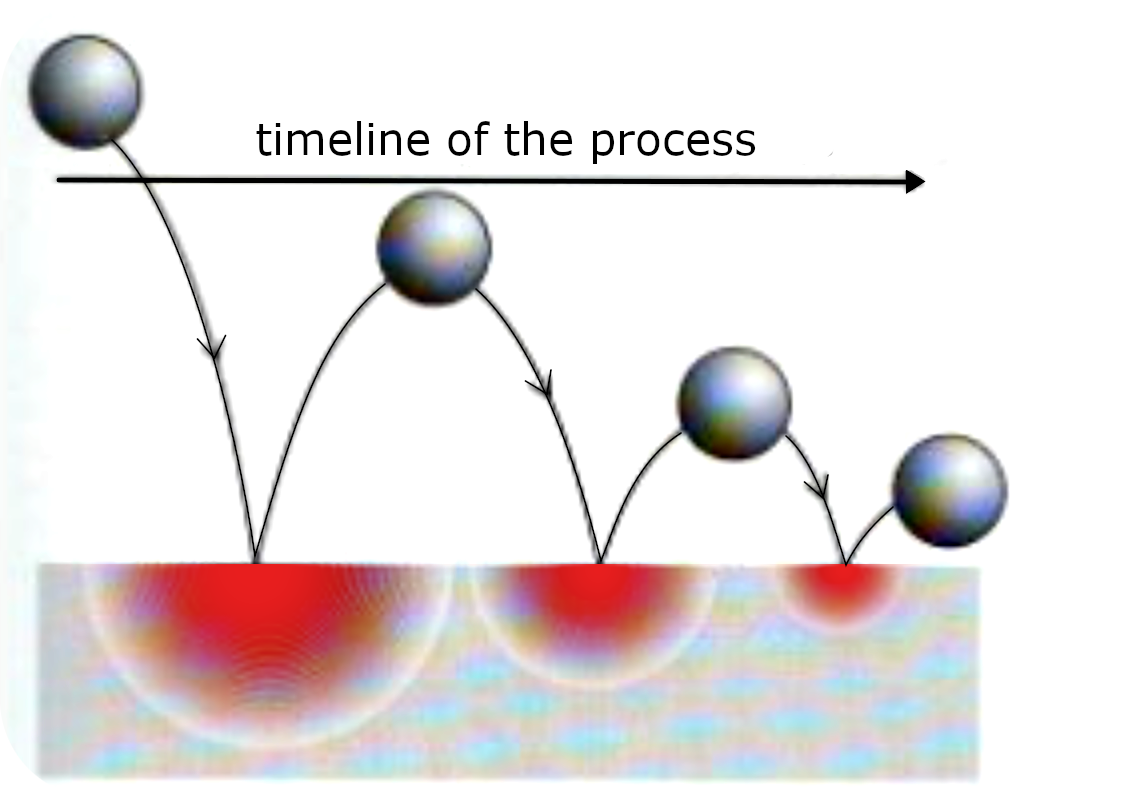 |
Bouncing rubber ball. The bouncing rubber ball also generates heat with every impact (strictly speaking, even when moving through the air, due to air resistance). This loss of energy through heat causes the ball to eventually come to rest. (Sketch: Author) |
But what do both concepts or the real events have in common? They have an initial state (raised ball, intact wall) and a final state (ball resting on the ground, hole in the wall). And both processes generate heat. The things mentioned cannot return to their initial state on their own, without further human intervention; the processes are irreversible. Only in the human imagination can the initial state be exactly recreated, like in a film running backwards.
So we can now come to the conclusion, or if you like, to the following hypothesis based on the examples given so far:
All natural and technical processes in the physical world are irreversible and involve the occurrence or accompaniment of physical heat. Or: All physical transformations or changes in the external world are irreversible and are accompanied or even triggered by physical heat. All these changes can be described as a kind of loss or dissolution, which manifests itself in the heat that is emitted.
Notes:
For readers who want to know exactly: The assumption that various processes are repeatable or reversible is based solely on the fact that observations are not precise enough. For example, the bouncing process of the ball mentioned above would only be truly reversible and exactly repeatable if the heat released returned to the ball in exactly the same bursts, the ball moved backward in exactly the same way from a state of rest, and then repeated the exact same movement from exactly the same height.
Wear and tear, which is a familiar concept in everyday life and technology, can also be considered a loss or dissolution (without it, you would never need a new car, for example!).
The external heat that accompanies every transformation can be observed very clearly in natural radioactivity: The decay series of thorium serves as an example:
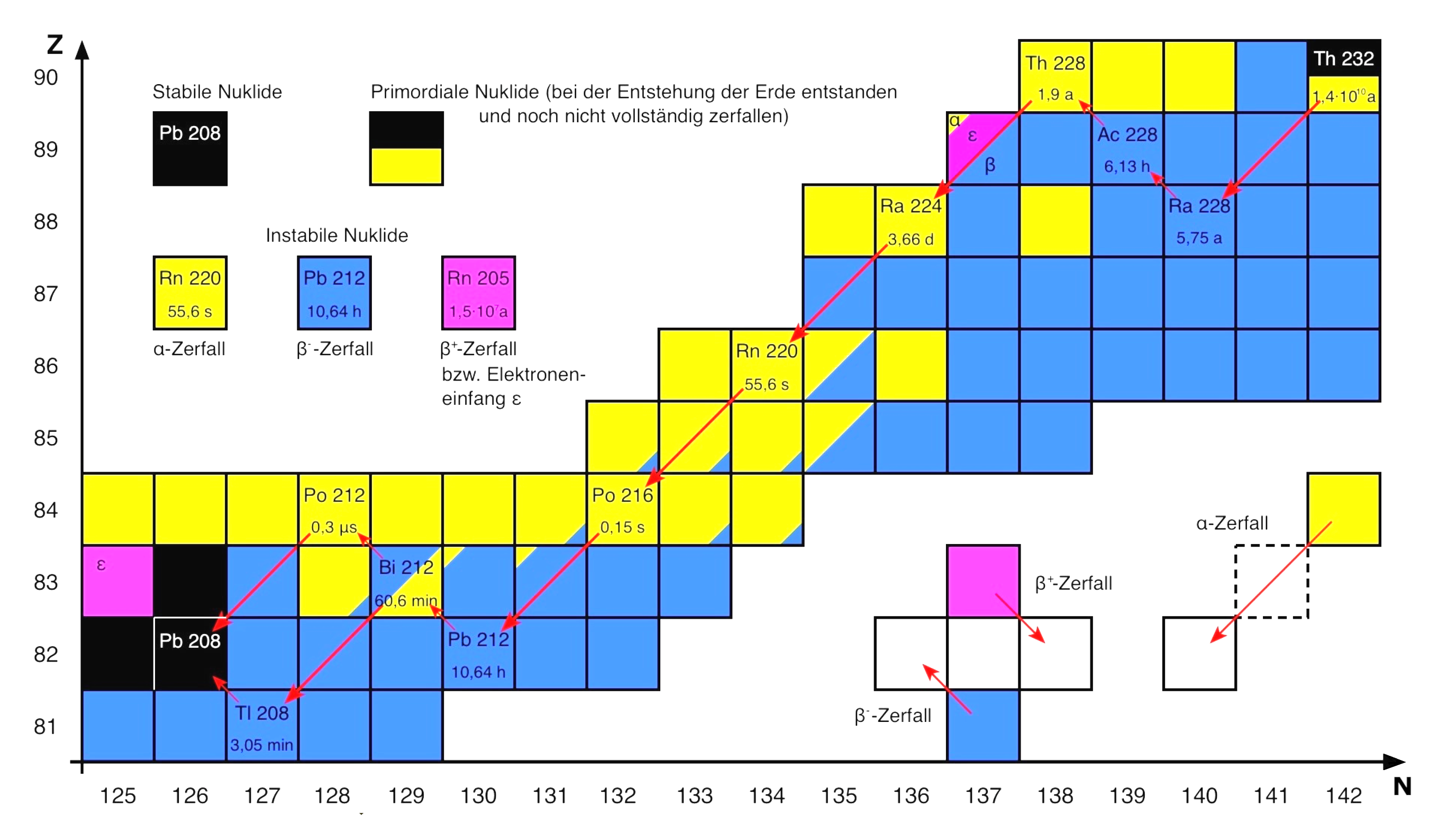 |
The heavy metal thorium (Th) occurs naturally exclusively as 232Th, a primordial nuclide, i.e., a form that is believed to have been formed when the Earth was created. Its decay via intermediate steps to lead 208Pb contributes to geothermal energy. (Image: Excerpt from the "Karlsruher Nuklidkarte" ("Karlsruhe Nuclide Map") 2018, revised) |
During most stages of the conversion of thorium, alpha radiation, i.e. helium radiation, is released, which is converted into neutral helium gas. In addition, all of the energy released is ultimately converted into heat, so that, in addition to the lighter element lead at the end of the series, a volatile gas and volatile heat are obtained.
This means that part of the originally solid metallic matter has been converted into a volatile gas and heat. In this case, one can truly speak of a decay or dissolution of matter accompanied by thermal processes.
Now let's move on to the second major topic, heat-ether:
In order to approach what the phenomenon of the so-called heat-ether is and how it could be understood, I refer to Heinz Grill's yoga practice of the "Neue Yogaempfindung" ("New Yoga Sensibility"). I will illustrate my following explanations with examples from this yoga practice.
For a better understanding, I will first let Heinz Grill speak for himself with a quote about yoga:
"Unfortunately, the term yoga is now only associated with physical exercises. The root word underlying the term yoga is derived from yuj (Sanskrit) and means to connect, to unite, to resolve divisive opposites through insight. In reality, yoga therefore means a sovereign force for consciousness, which the individual brings into life from a fully mature way of thinking and perceiving4."
4) Heinz Grill, Buch: "Erkenntnisgrundlagen zur Bhagavad Gita", 2024, ISBN 9783948803186, S. 17 ("Fundamental Knowledge of the Bhagavad Gita").
This means that a person takes a clearly formed thought or idea that they hold in their free consciousness and translates this idea into the external form of the yoga asana posture. This always takes place in an interplay between observant calmness in the gaze toward the imagined idea and active shaping in the various regions of the body. (For a deeper understanding, please refer to the literature by Heinz Grill.)
The so-called asanas, or postures, in yoga express in an artistic way the relationship of man, and even of the individual, to the world as a whole. What these relationships are like, or what they mean in the various individual positions, must be explored sensitively; this is also an essential part of this yoga practice. However, it means that on this path of knowledge, the individual does not remain the same in relation to the world, but undergoes a transformation into something new.
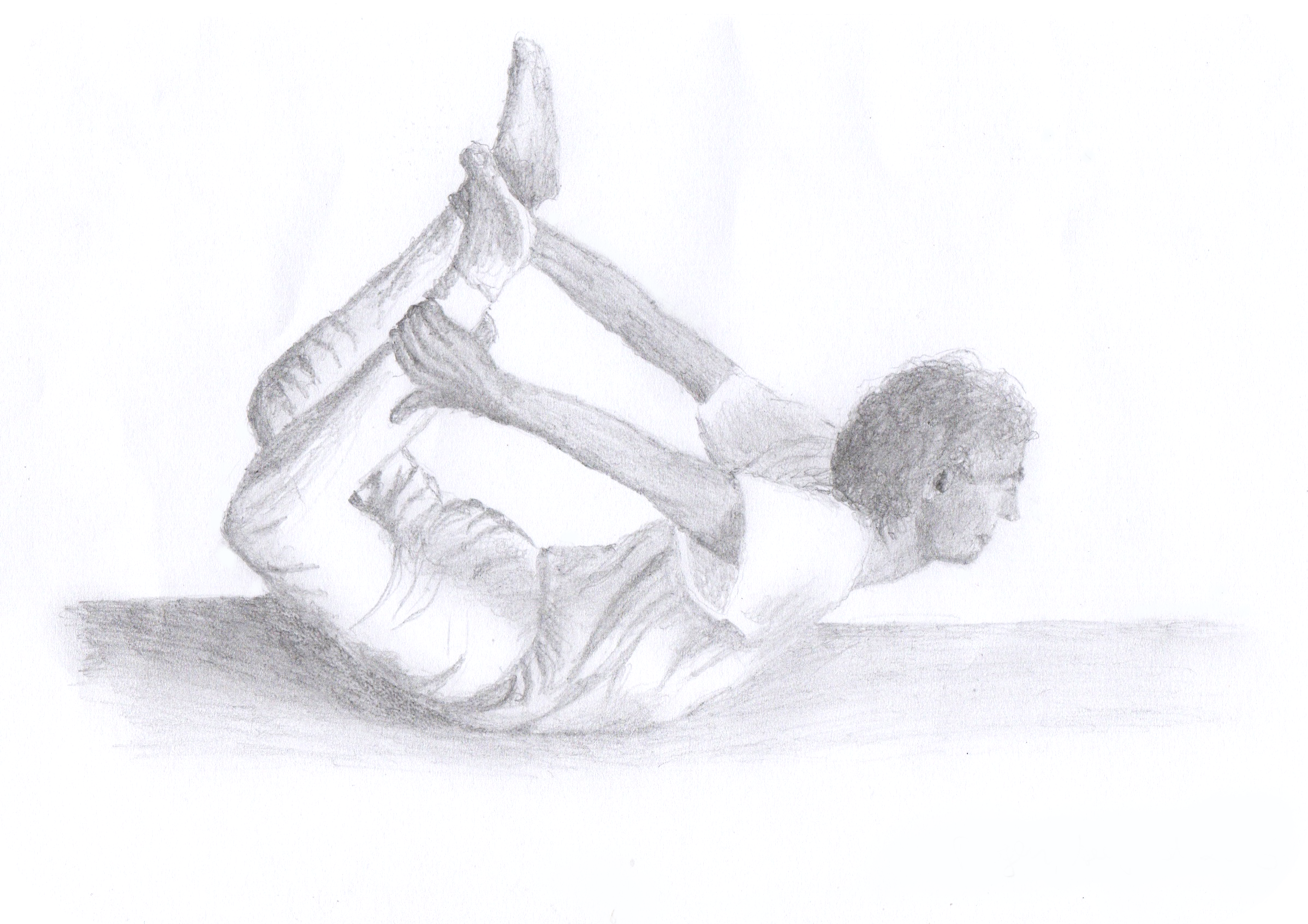 |
The asana position "Bogen" ("bow.") "The Bogen (bow) is a symbol of healthy nervous and physical tension and represents the vital substance of the ability to concentrate, which the practitioner activates from the circumference of his or her environment and mobilizes in response to an activity from within himself or herself through his will. The circumference and the center inside work together. In the Bogen (bow), this center is marked by the middle of the tension5." (Drawing: Author) |
5) Heinz Grill, book "Die Seelendimension des Yoga", 2015, ISBN 9783941995970, pages 158, 159 ("The Spiritual Dimension of Yoga").
If the practitioner succeeds in withholding familiar bodily sensations, associations, and disruptive influences during the exercise, he or she will experience new sensations and a sense of openness in his or her surroundings while remaining centered. Of course, it is also necessary to engage in the practice of the exercise described here in order to experience it for oneself.
But this experience of a primary form of creativity can be transferred to all other processes in which man becomes active in the outside world in some way. Whether it is the construction of a building, the design of machines, the sculpting of a work of art, or the writing of an essay: if, in all these processes, people truly start from an idea or a conception of the ideal of the thing, proceed to its implementation, and carry it out in the interplay of active action and calm contemplation of the conception held in free consciousness, similar processes of feeling and experiencing something new will arise, which are connected with the sensually imperceptible action of the heat-ether that has been formed.
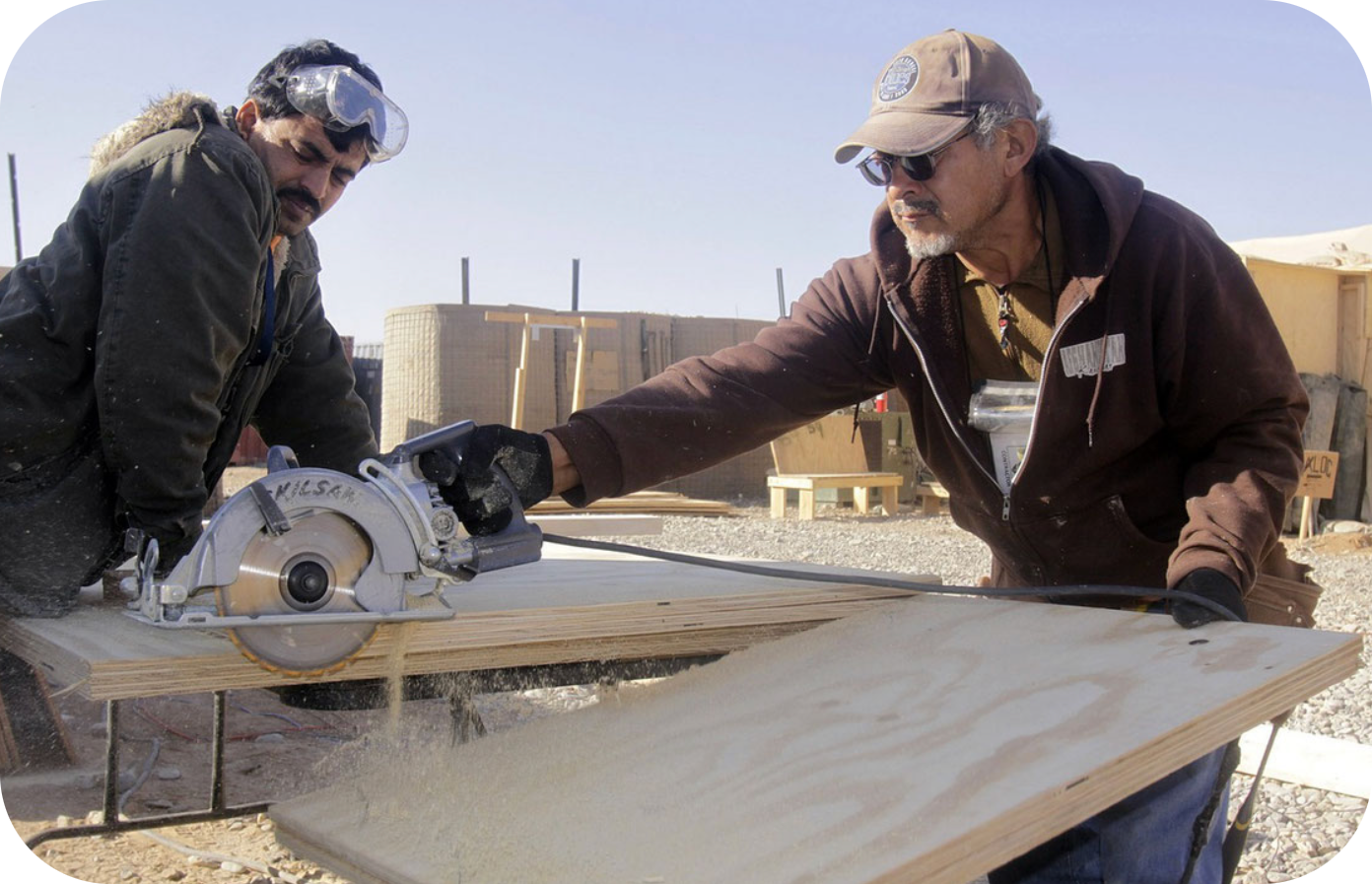 |
The working, creative Man. In the changing interplay between educated imagination and action on an external object, something new arises in the man that is expressed not only in increasing external skill, but also in the essence of heightened individuality. (Image: Pixabay) |
It begins with an idea, a thought, or a concept, and ends with its implementation in the external material world, whether that be a form created with one's own body, a building, a machine, or a work of art. Man has then brought about an irreversible change in the world, and this change affects not only the external world, but also his or her mental structure in the sense of new sensations and an expanded sense of centering and a broader relationship both to the thing itself and to the context in which this thing exists. This “context” refers to the entire relationship to other people and the outside world.
We can now form individual ideas about the various statements concerning the heat-ether. It is important that the reader really immerses themselves in the images and ideas, building them up during reading, so that he or she can arrive at the appropriate sensations.
One statement is: “The heat-ether has a connecting effect ... and creates circular shapes.” Or, in other words: it has a connecting effect in circular shapes.
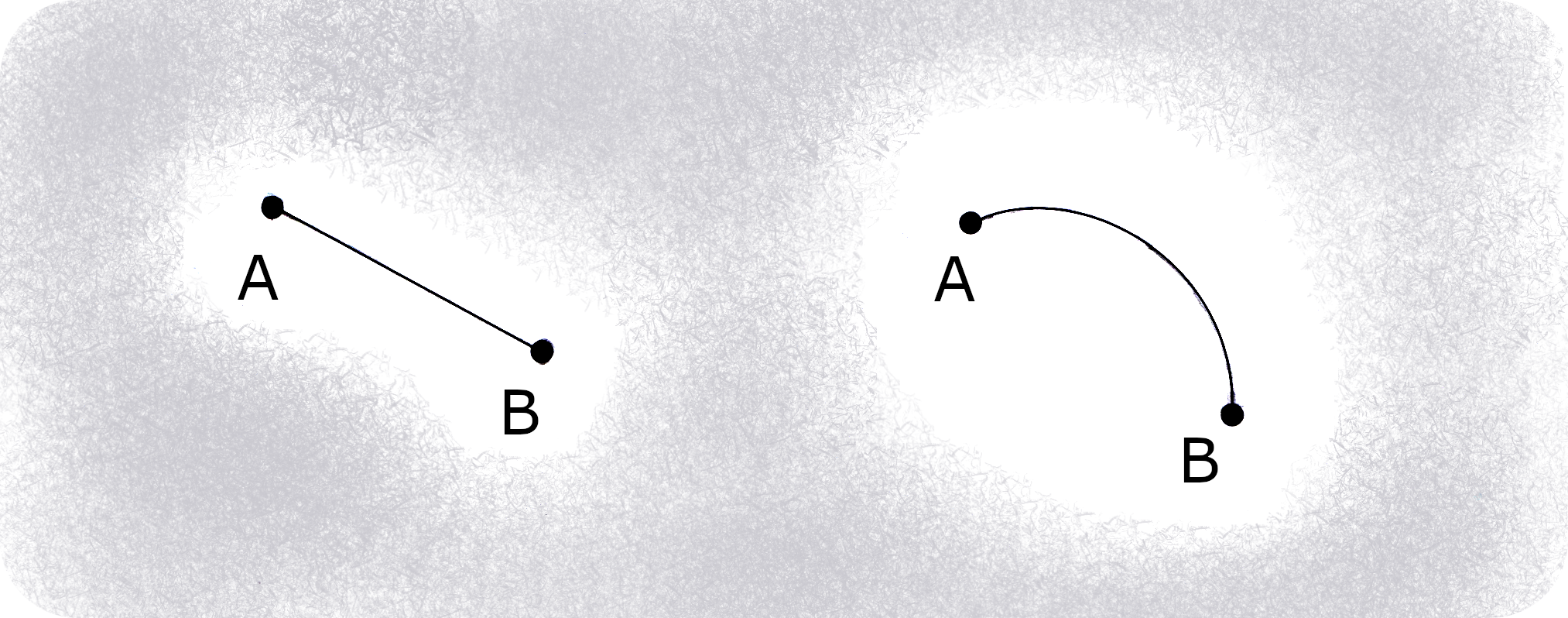 |
Here is another little observation exercise. Look at the simple picture with the two connected dots and ask yourself: "In which of the two images do the dots appear to be more connected? (Sketch: Author) |
In the lecture at the Free University of Lundo, participants clearly felt that the right-hand image had a stronger connecting effect. Some even perceived the straight line as not only neutral, but also divisive. The result suggests that rounded shapes between two objects are perceived as more connecting than straight lines.
As a supplement, the reader can, for example, look at a landscape with houses, fields, wooded areas, and mountain ranges that he experiences as connected and harmonious. He or she can then ask himself whether he or she experiences the connection between the individual details as straight or rather round or curved.
The rounding and connecting element is already expressed in a physical and sensory way: most bridges connecting one bank to another, one mountain range to another, or one district of a city to another, are built in an arch shape. This is a direct result of the mechanical laws of force distribution, which ensure good stability and connection in this form.
 |
The Golden Gate Bridge in San Francisco, USA. The bridge itself and the two vertical pillars appear straight. However, the suspension cables that bear the main load are curved. It would be impossible to tension these cables so that they were completely straight, as this would require “infinitely large” forces and the cables would snap before that could happen! (Image: Pixabay) |
A small example of how fundamental thoughts or ideas, which are taken as the starting point for a consideration or research question, also influence the result of this consideration or research question, or in other words, which part of an entire phenomenon then leads to insight:
 |
A cactus collection. If we start from the assumption commonly held in biology that all living creatures are primarily concerned with survival, with the preservation of their species, and that all living creatures are constantly engaged in a kind of competition, then we might say that these cacti have their spines or thorns simply to ward off predators. (Image: Author) |
 |
However, if we assume that all plants interact with sunlight and derive their vitality and form from the wisdom of this light, then we get the impression that the spines or thorns represent a kind of communication between the plant and the light. Even a purely physical observation suggests that these spines or thorns act like a light guide or fiber optic cable, conducting light into the interior of the plant's body. (Image: Author) |
From the connecting arch shapes described above, it is not far to assume that the effect of the warmth ether is formed from the periphery and the center. These images now concern the relationship between the idea kept free in the periphery as a counterpart with its implementation in the visible world and the creation of a center in the human being itself and in its environment.
In this interaction between the imagination, which is kept free in the surrounding consciousness, and the guided physical activity described above using the example of yoga practice, the practitioner experiences a new and deeper access to the yoga posture. In his or her calmness and centeredness, he or she finds a new perception and a new relationship to the exercise from a place of free consciousness. His or her relationship to the exercise has changed; it is no longer the same as it was before performing the exercise.
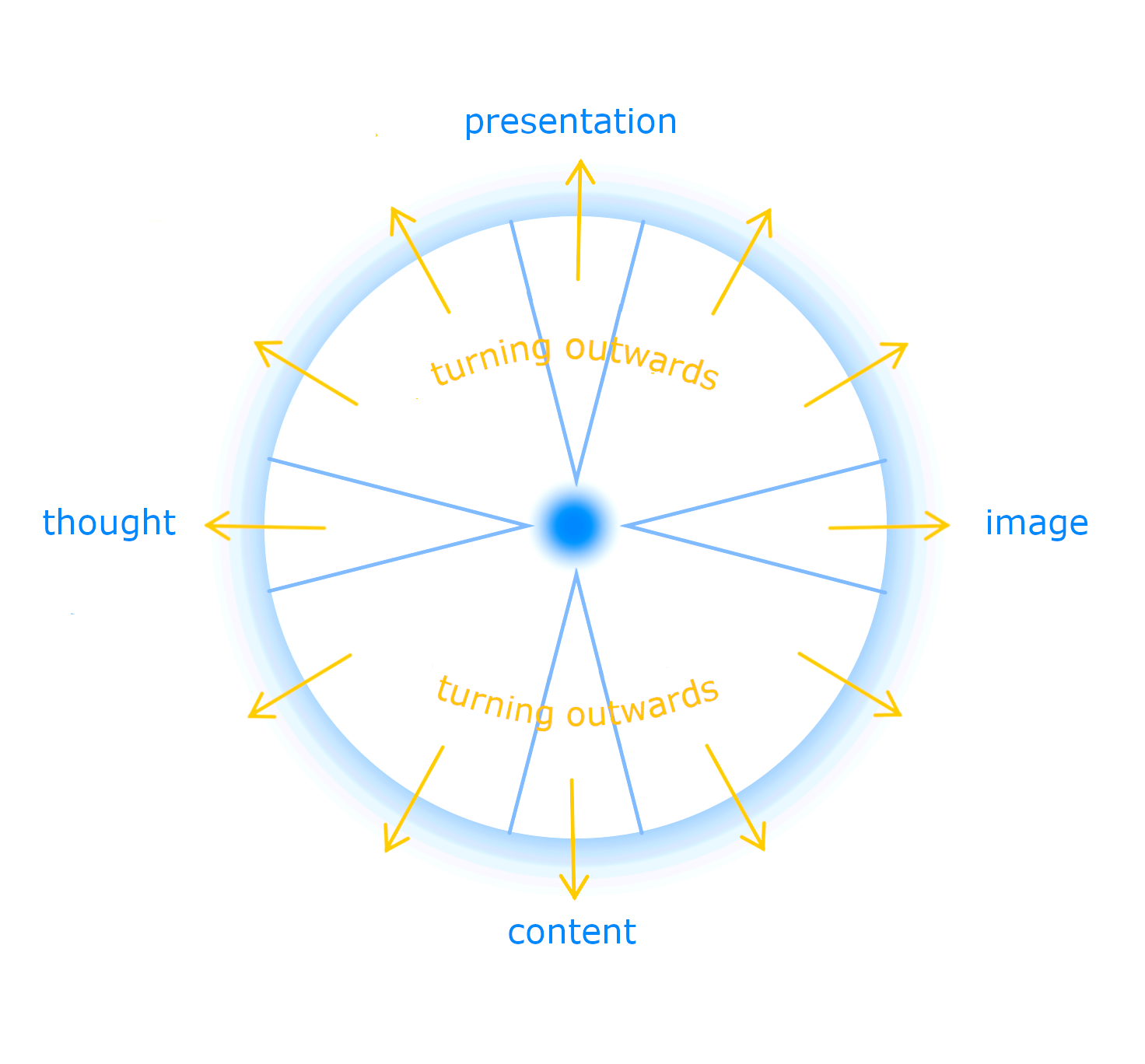 |
|
So we are dealing with a process or procedure in which something new, a new relationship or an expanded relationship, emerges, representing a transition from something that existed before to something new.
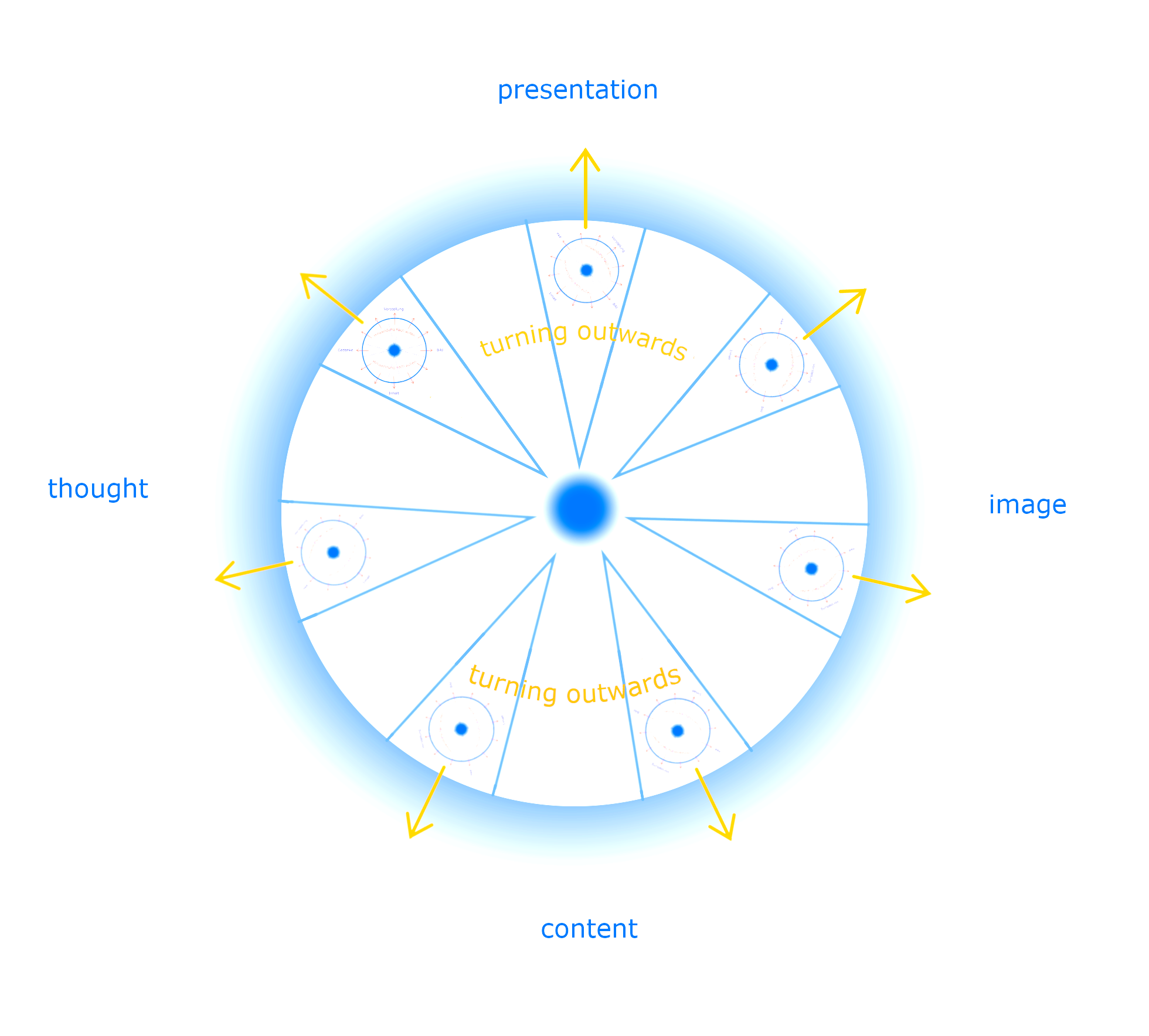 |
Center and periphery 2. (Image: Author) When several people work together on a project, a topic, or even the development of a yoga pose, starting from a freely held notion, idea, or thought and implementing it in collaboration, the idea in the free periphery gives rise not only to a sense of centering among the individual contributors, but also to an overarching center of the common cause. |
If this collaboration takes place over a longer period of time in the establishment of a joint institution, this institution will develop its own center, its own “soul,” in its activities. I thus explained to the participants in the lecture that their activities at the local university give it its own soul, which, with the centering and at the same time opening effect of the heat-ether formed, can also have a far-reaching effect on the environment and the people around it.
In various other projects of this kind, something new is also irreversibly created in the process: the participants themselves not only gain a new relationship to the common theme, but also to each other and to the entire project.
We can now draw a similar conclusion for heat-ether as for physical heat:
All processes and procedures carried out by man in the manner described above are irreversible and involve the occurrence or accompaniment of heat-ether. Or: all transformations or changes in the external world carried out consciously by man are irreversible and are accompanied or even triggered by heat-ether.
With all these changes, however, one cannot speak only of a loss, which undoubtedly occurs in the processed material and manifests itself in friction and physical heat. Rather, something new is also emerging, something that affects both the spiritual and metaphysical levels, but is also visible as a created form on the outside and has a life-giving or life-supporting effect on people and the surrounding nature.
We can also assume the above conclusion for all natural processes, although natural processes that appear to occur independently of humans have not yet been sufficiently considered in our discussion of the heat-ether. For the concept of irreversibility, see the comments already made on physical heat.
 |
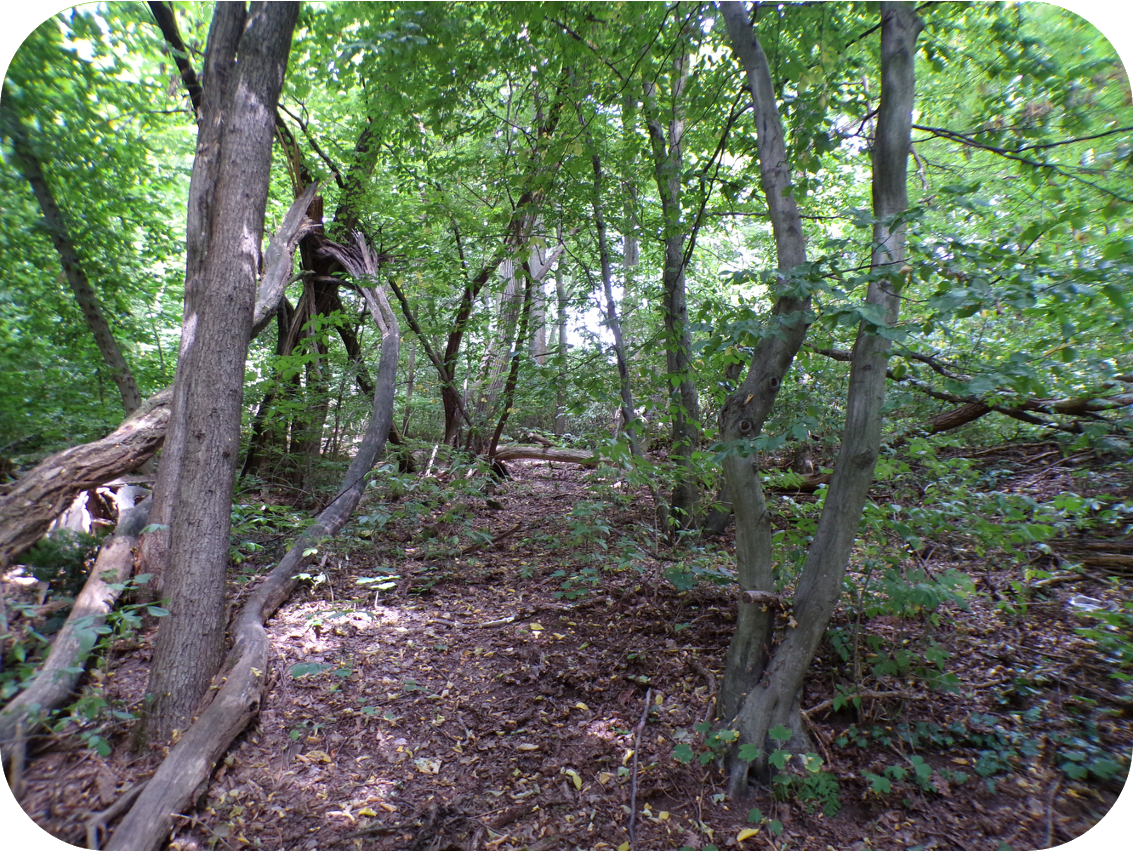 |
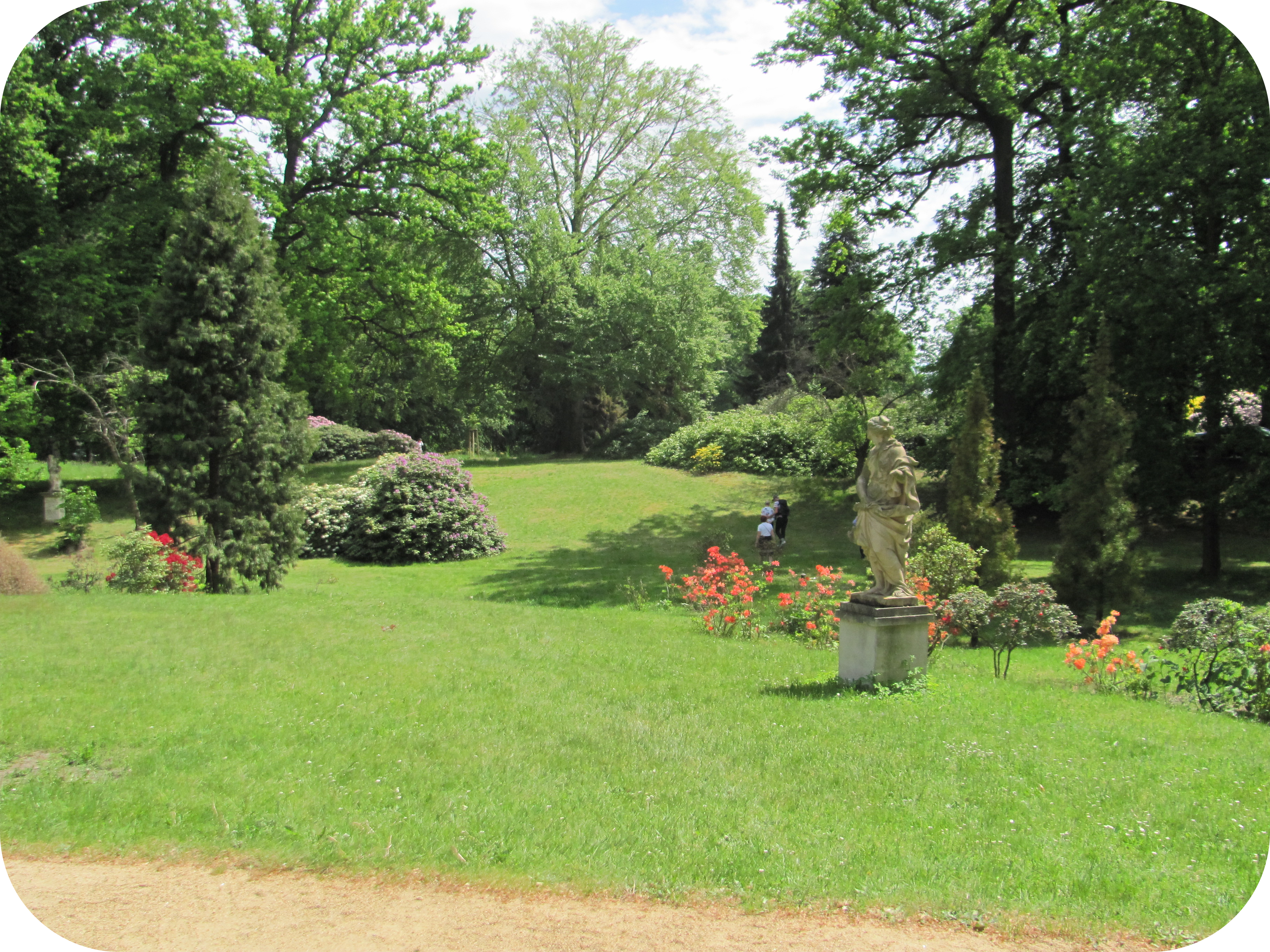
| Left image: Kromlau Castle Park in Saxony. Work on the park began in 1844 and continued over a long period of time. The ideas and creativity of various landscape conservationists shaped the park, which is still maintained today. The trees, some of which are up to 150 years old, and the rhododendron bushes, some of which are up to 100 years old, are still in good condition. Right image: A forest near Chemnitz, Saxony. The forest is largely left to its own devices, with humans only intervening when absolutely necessary. Fallen trees and dead wood are left to lie and rot. Many trees there often only reach an age of 30 to 50 years. (Images: Author) |
The fact that heat-ether also occurs in nature and accompanies natural processes and phenomena as well as physical heat requires further research into its origins. In the second part, when considering the heat-ether, we only looked at the immediate activities of man and did not yet include general nature, which in its processes appears to be independent of man. What deeper connections could exist here? However, it stands to reason that the constructive activities of man also have an invigorating effect on nature, see the images above.
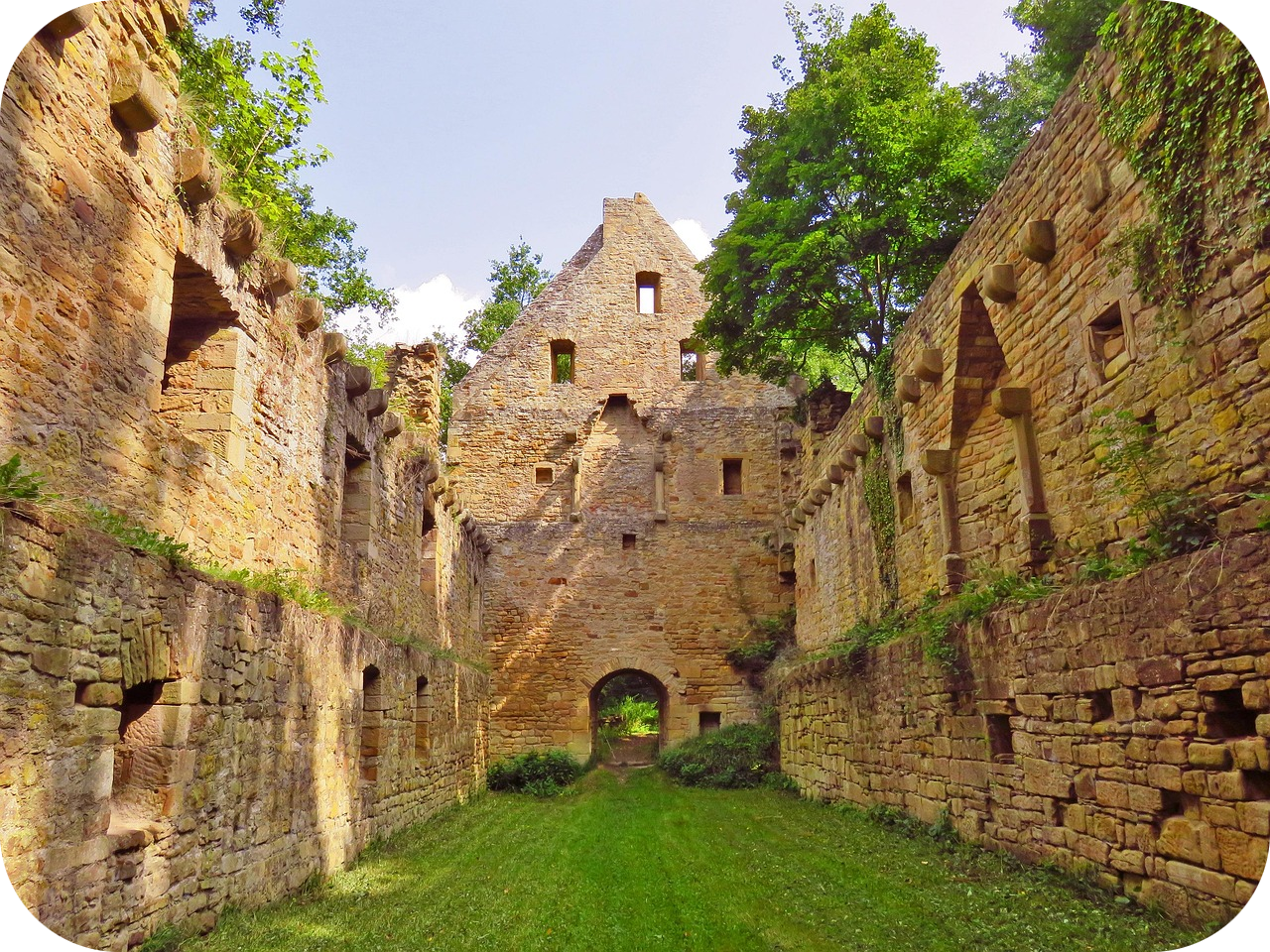 |
The ruins of a monastery building. The monastery complex may once have been built with the idea of creating a community with higher religious goals. The buildings were conceived, planned, and constructed in what is now likely a distant past with a great deal of human effort. Today, only ruins remain of this complex, and these will continue to decay. However, the idea of a community with higher goals as such has remained and developed further, and is now available to people in this expanded form. (Image: Pixabay) |
The material used in projects of man is not new, but rather the new finds its external visible expression in the material in the form it is given. In its true meaning, however, the origin of the external form as an idea remains metaphysical. The material itself, and with it the external visible form, are subject to transience. The material form is only that which is expressed externally from the idea. It will itself one day pass away, like all other external manifestations, accompanied by physical warmth. The form once formed externally should therefore not be confused with what man really produces that is new in the activity of the heat-ether, which also continues in the development of the world as a whole.
In summary, I now put forward the bold hypothesis:
Physical heat and heat ether are just two sides of the same process of transformation that takes place throughout the world.
Physical heat accompanies one part of the passing away in the sensory world of matter, while heat-ether accompanies the other part of this process, which is becoming new or “rising up” or " resurrecting" in the metaphysical or spiritual world.
The ether of warmth is development; it is that which connects, creates relationships, transforms; it is time itself. Physical warmth is merely the reflection of this temporal, creative force in space; it is the expression of decay or “passing time.”
Notes:
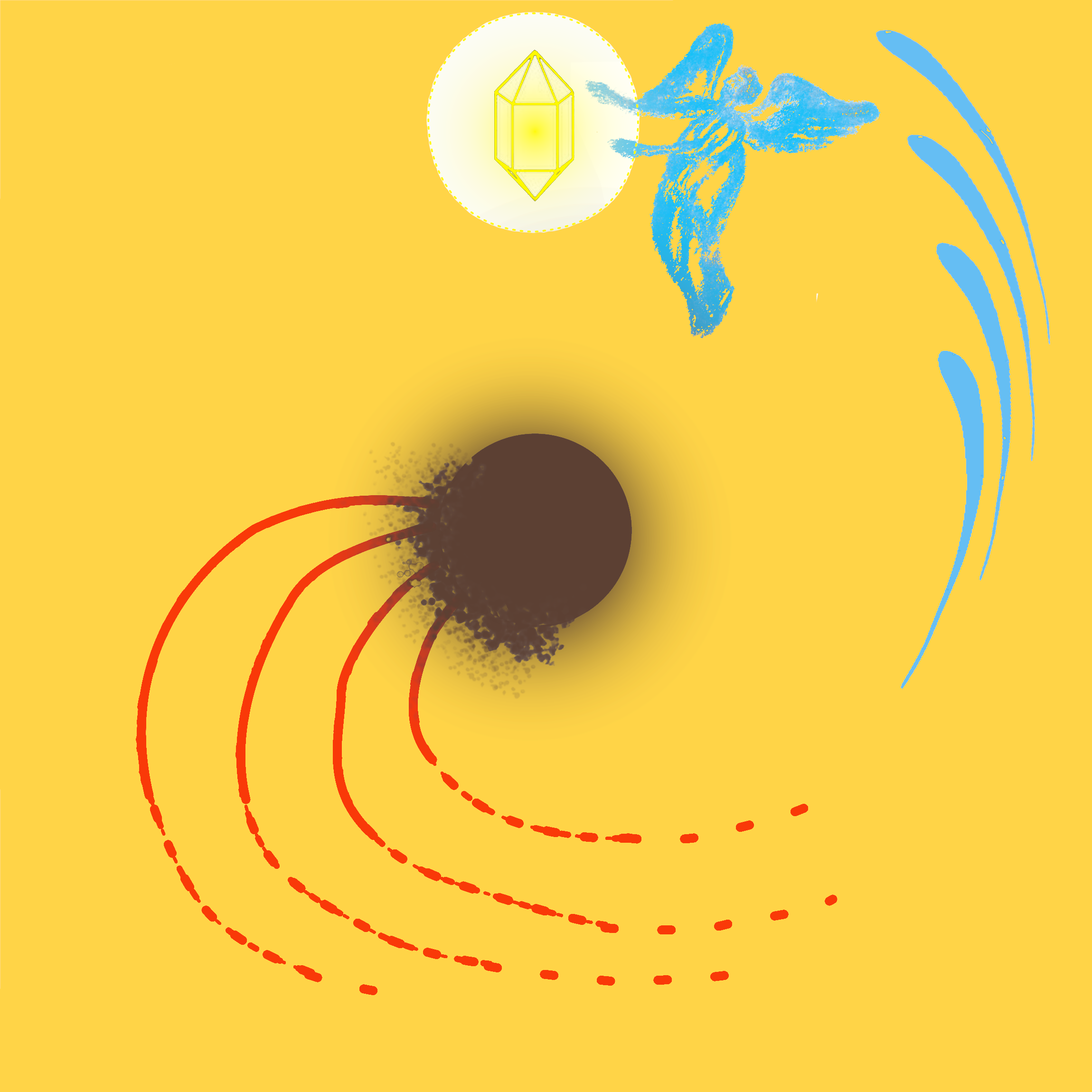
The relationship mentioned in the hypothesis could be the reason why a metaphysical force has been given the name “heat-ether” in the spiritual science. External heat and heat-ether are “like two sides of the same coin, top and bottom, head and number.” The reader can now also see in the aforementioned hypothesis the description of the image placed at the beginning of the article, which was deliberately omitted at first.
In my opinion, the external sensory world and the science that relates to it encompasses only that which is dead, has already come into being, and is passing away. Therefore, science only captures the transience of the entire process in fleeting physical warmth.
Closely related to physical heat in natural science is the concept of entropy. Natural science uses this concept to capture the essence of transience in an abstract way and also derives from it the direction of “passing time” (see the author's article “The Relationship between Science and Spirituality,” point 3, “Life and Death - An Excursion into Systems Theory”). The possible metaphysical content of a "time becoming future in the resurrection" or "creative time" cannot (yet) be grasped by it. It is a Becoming New through original and individually formed relationships (see the formation of the heat ether).